Kitched
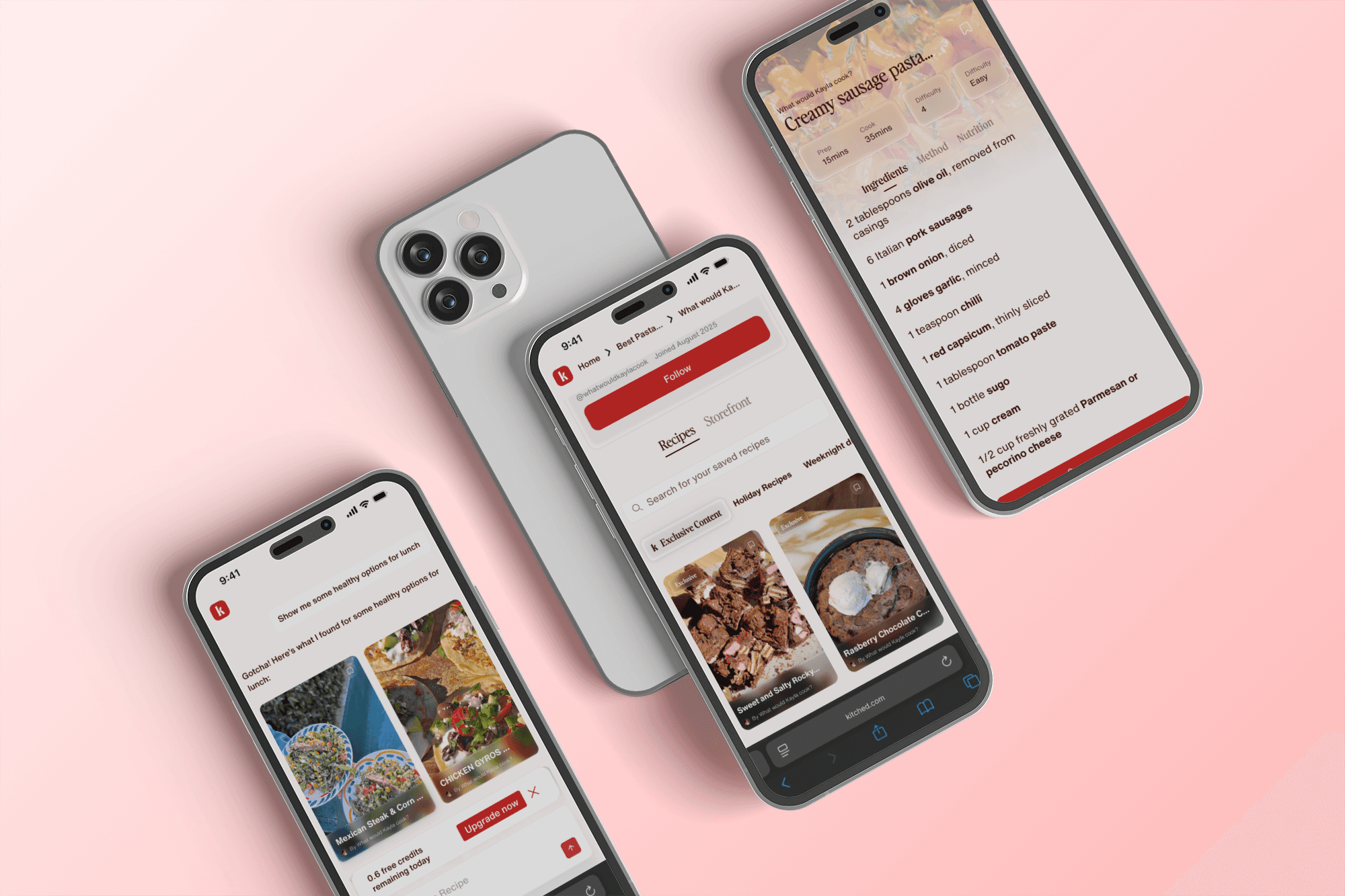
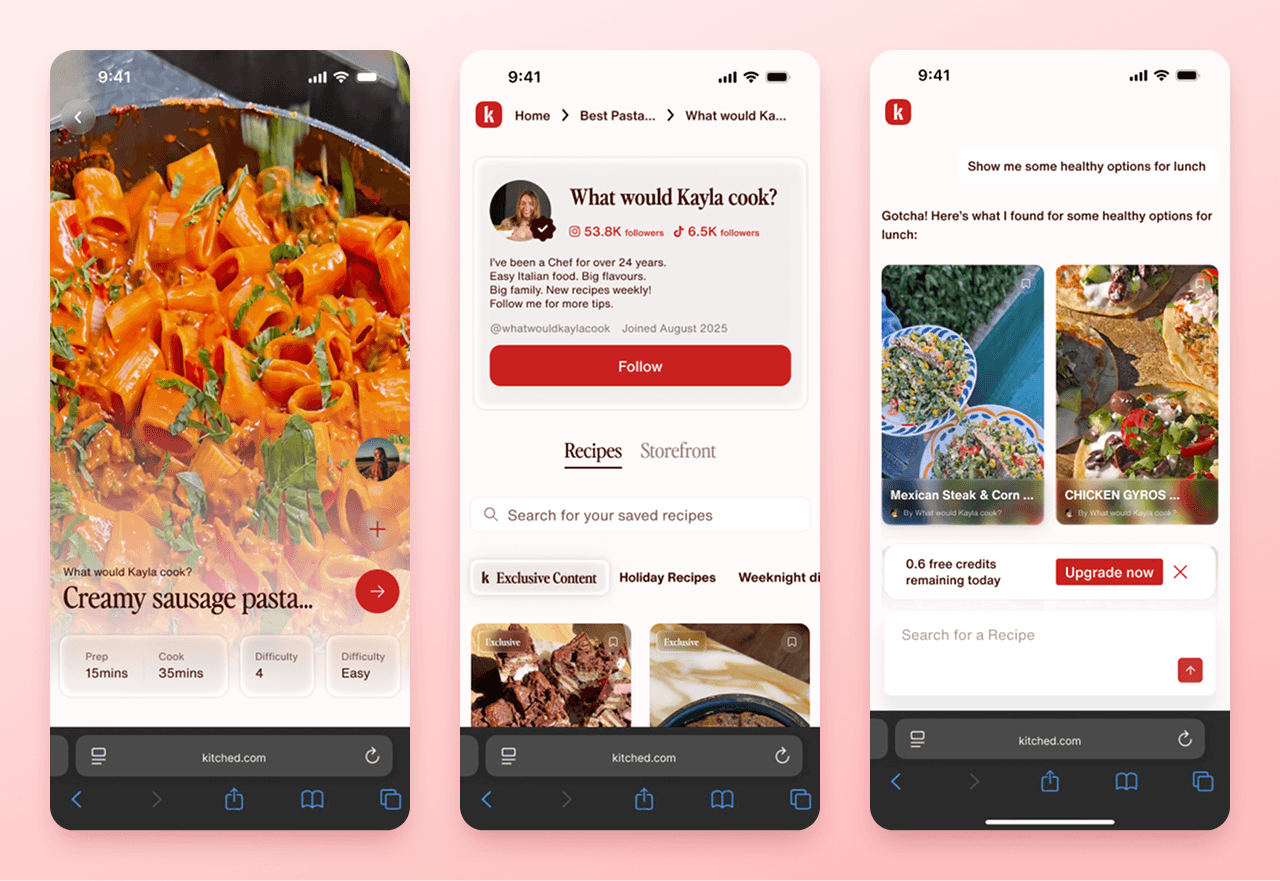
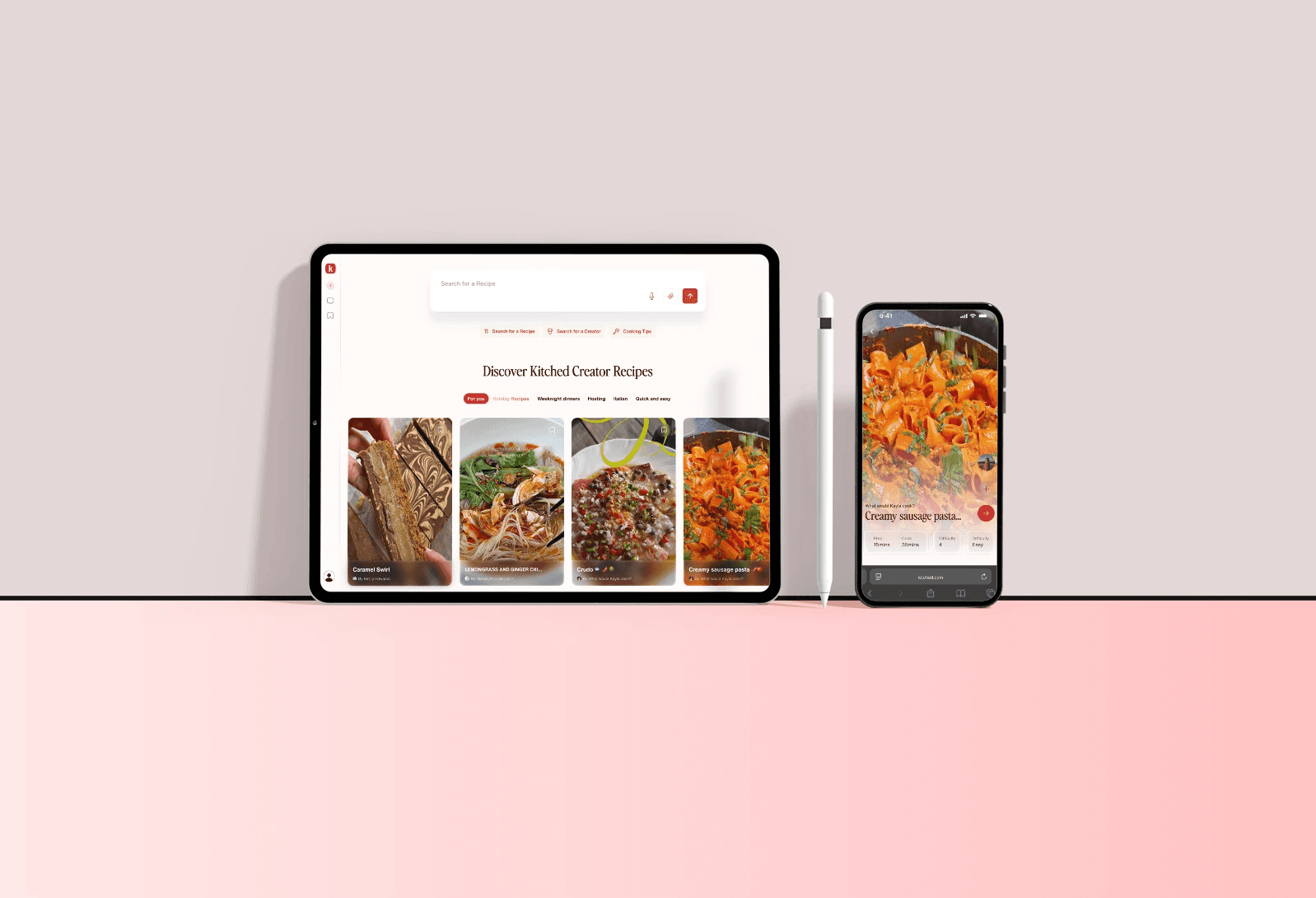
Kitched is the next-generation AI cooking platform built for creators, home cooks, and food lovers. Powered by advanced AI, Kitched transforms recipes, ingredients, and content into smart, interactive cooking experiences. Creators can publish, monetise, and showcase their best dishes, while users discover, save, and cook with personalised AI guidance. The project includes full-scale UX research, end-to-end product design for web and mobile, an adaptive design system, and AI-driven workflows built from scratch. delivering a seamless, modern experience for both creators and everyday cooks.
(Client)
Kitched
(TIMELINE)
Ongoing
(SERVICES)
UI/UX Design
Framer Development
(challenges)
Designing Kitched meant going from zero to one, fast. We had to solve complexity on multiple fronts at once.
Building a full product with an extremely small team
We had just two months to research, concept, design, and deliver a complete platform experience. No legacy work, no previous system to iterate on, everything was created from scratch.Tight deadlines across a dual-audience product
Kitched needed to equally serve two very different user groups:
• Creators sharing recipes and selling content
• Food lovers discovering, saving, and cooking with AI
Balancing both sides while hitting the delivery date was a major challenge.Designing for web and mobile simultaneously
The product had to work beautifully on desktop (for creators) and mobile (for everyday cooks). This doubled the UX surface area and required tight IA, adaptive layouts, and a clean system that held up across all screens.Integrating AI functionality without overwhelming users
The core value of Kitched relied on advanced AI features (GPT, Perplexity, multi-model recipe parsing, ingredient mapping, etc.).
The challenge: Make the power of AI feel simple, friendly, and effortless. Not technical or intimidating.Standing out in a crowded cooking-tech landscape
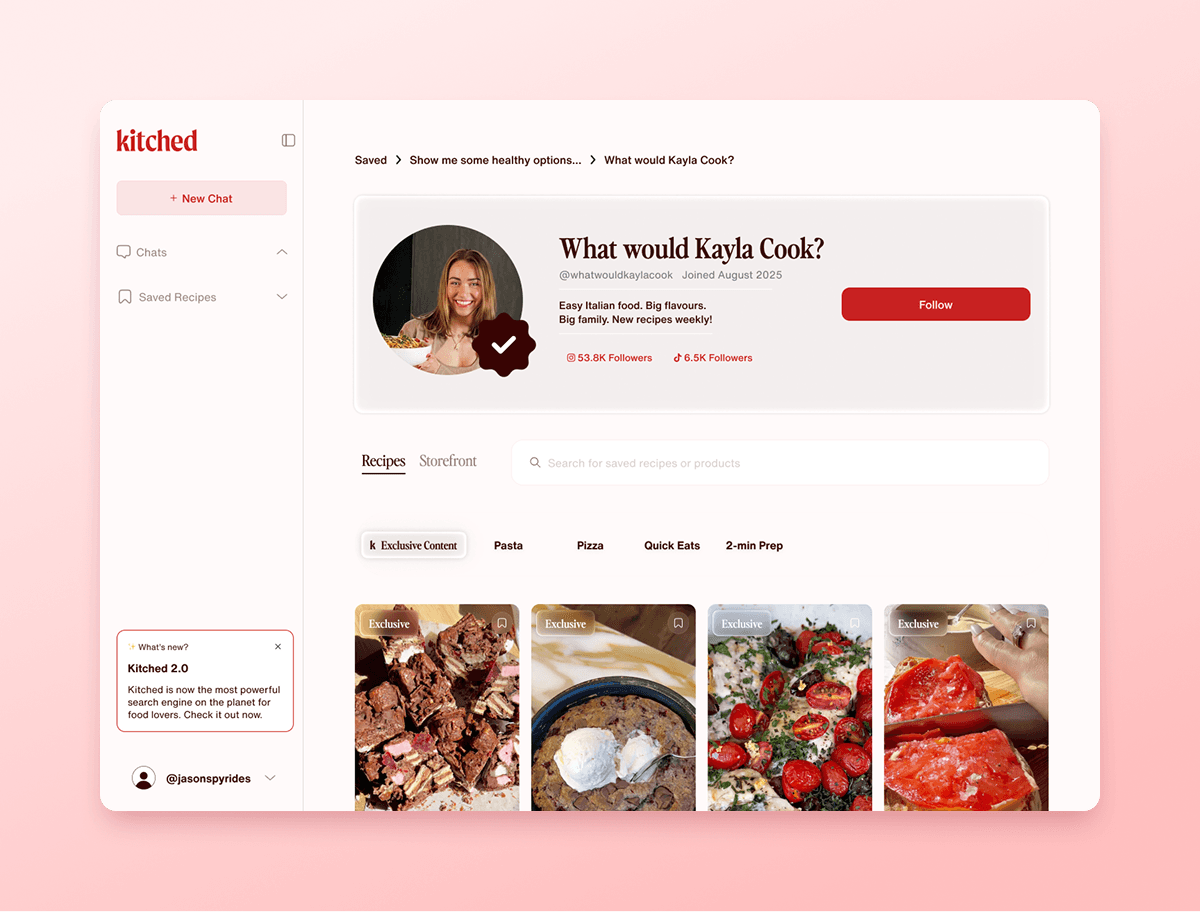
The food app market is saturated. We had to design something that felt modern, intuitive, social, and creator-friendly, not just “another recipe app.”
(SOLUTION)
1. A hyper-focused, founder-led design sprint
We structured the entire project around fast cycles, direct communication, and parallel work streams. Research, UX, UI, and AI integration moved at the same time, enabling a full zero-to-one product build in under eight weeks.
2. Dual-experience architecture built from day one
We mapped separate but interconnected journeys for:
• Creators (upload → parse → tag → publish → monetise)
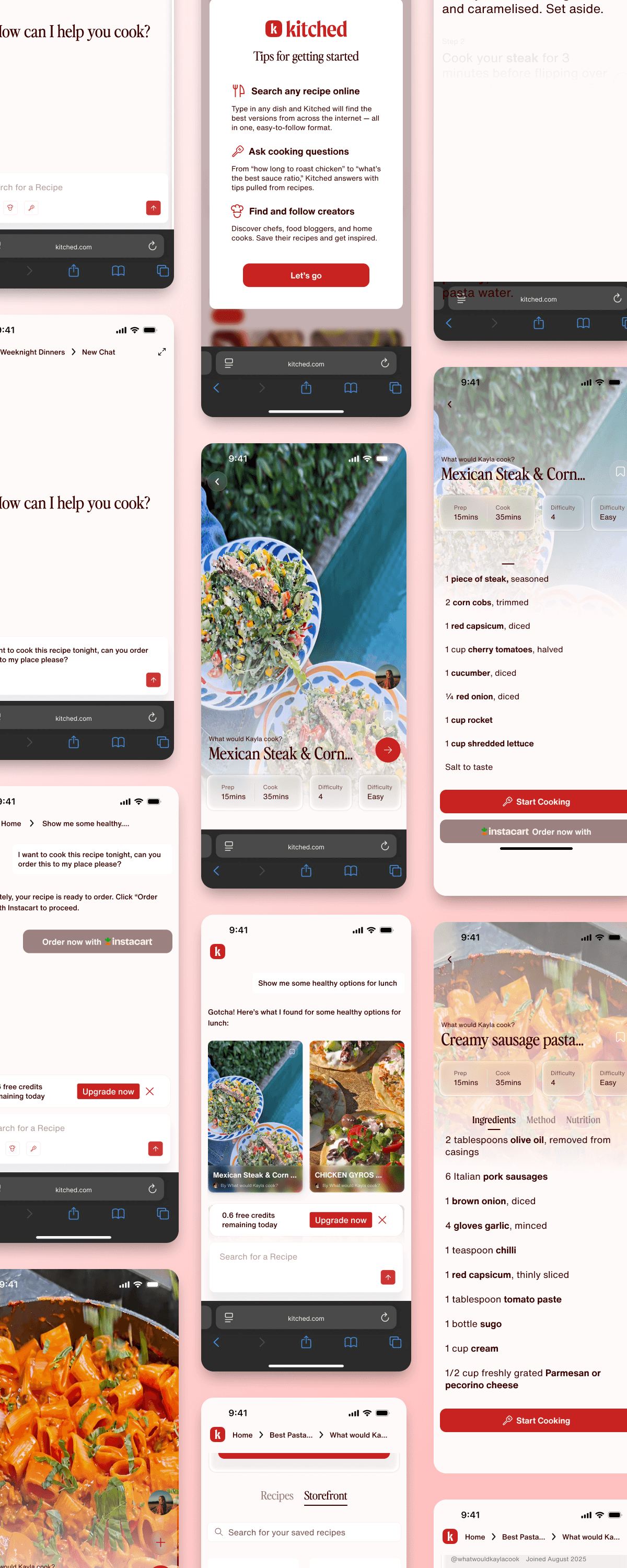
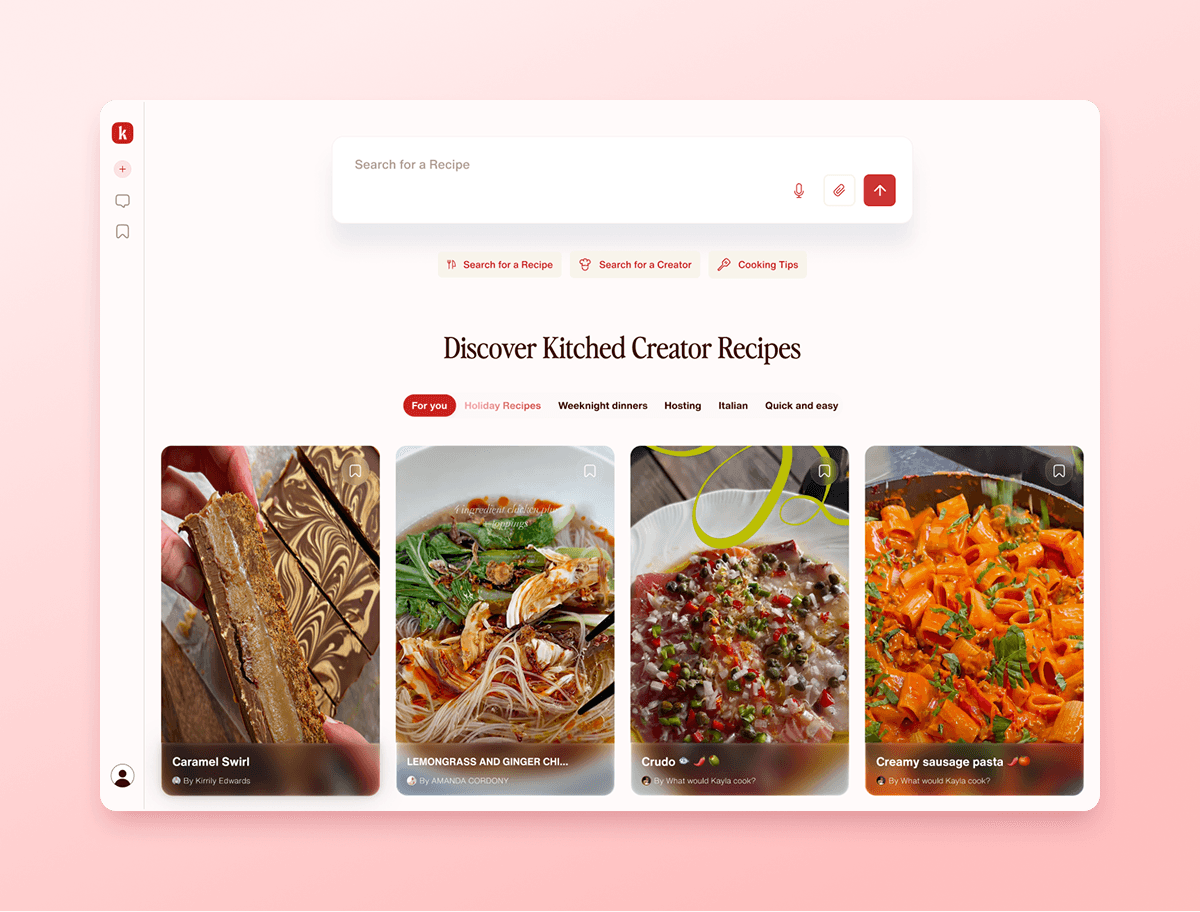
• Users (discover → cook → save → shop → follow)
This ensured neither audience was an afterthought.
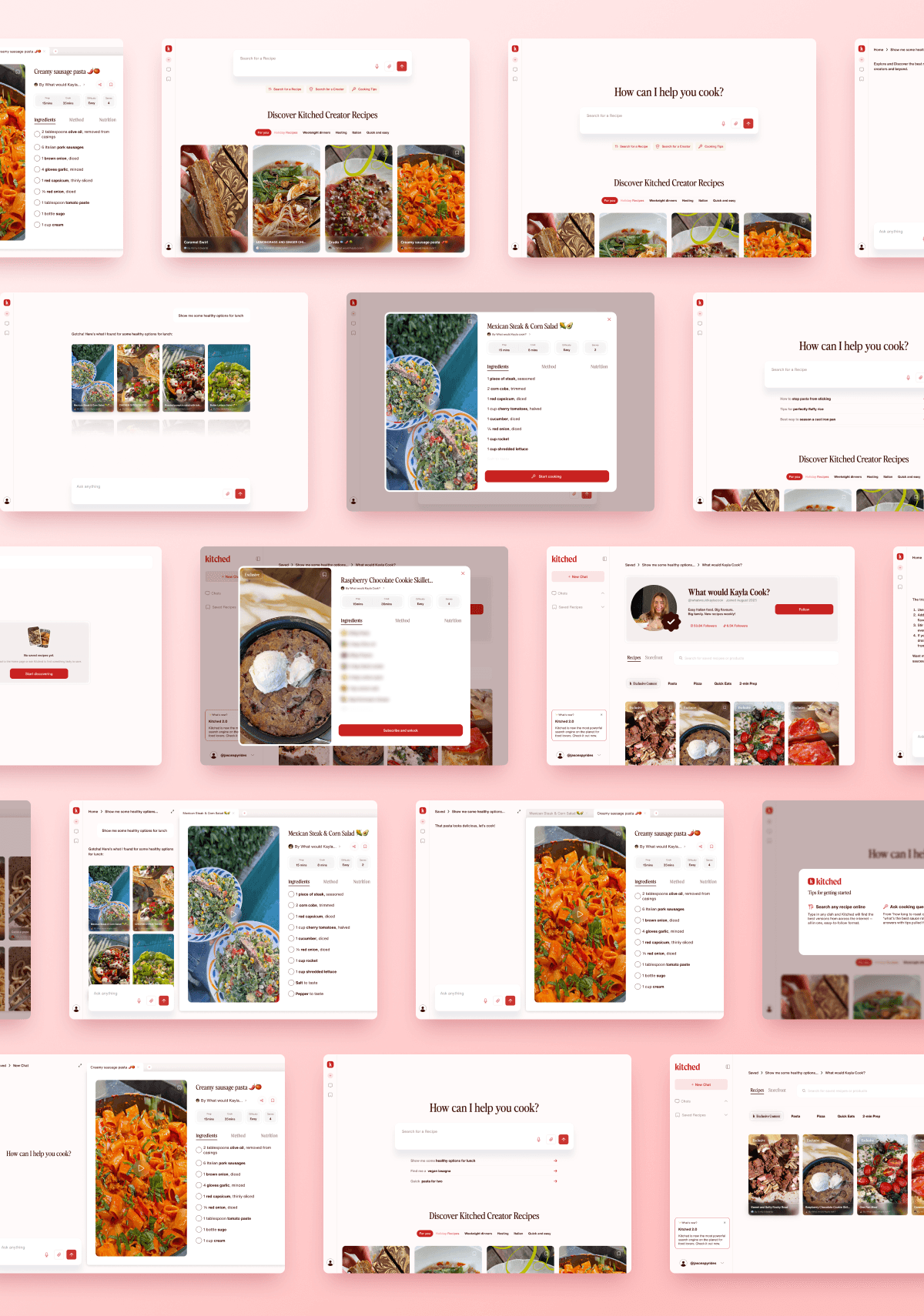
3. A flexible design system that scaled across devices
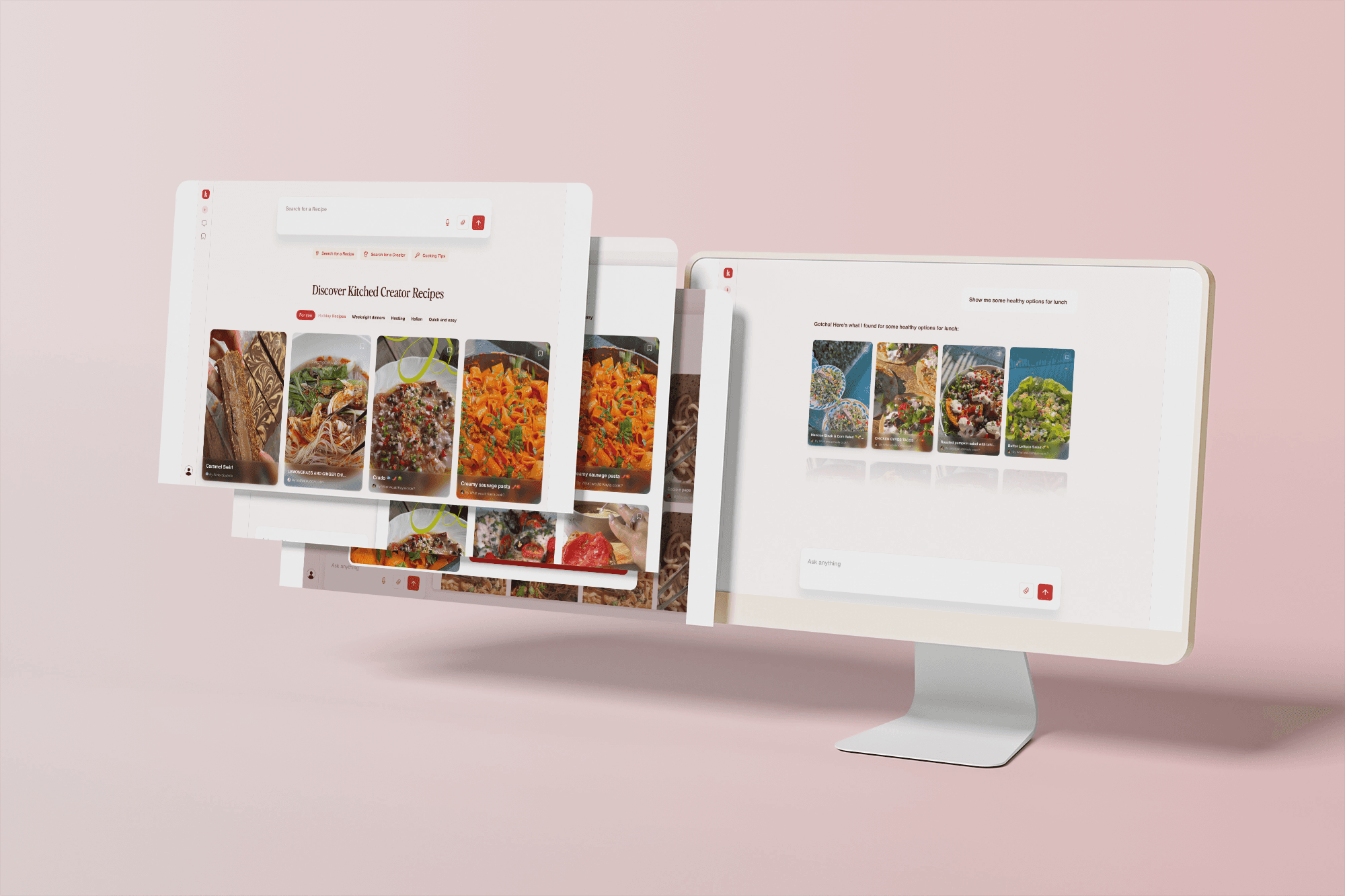
We built a modular UI system that adapted beautifully across desktop and mobile consistent spacing, controls, typography, and patterns that made both sides of the platform feel like one unified product.
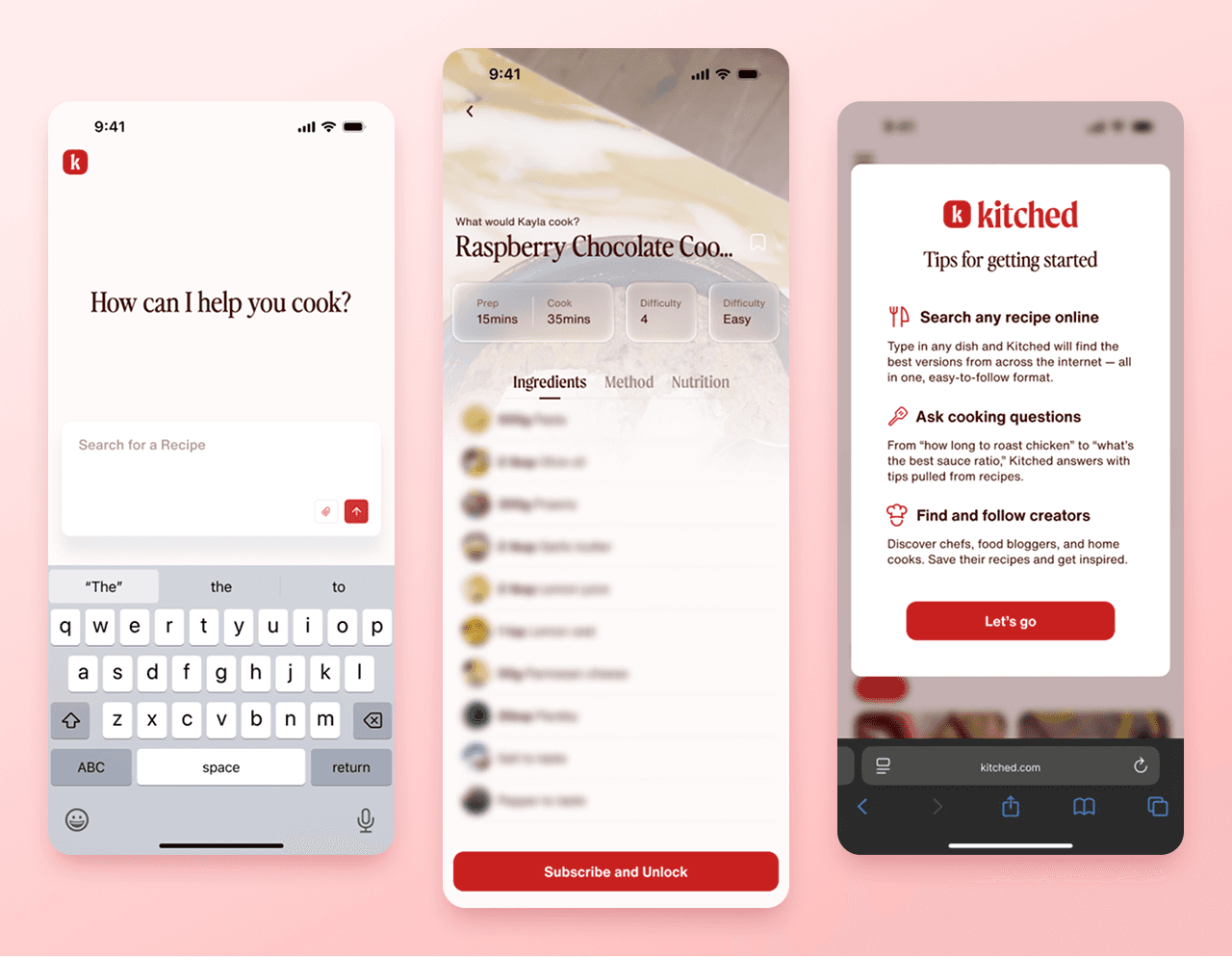
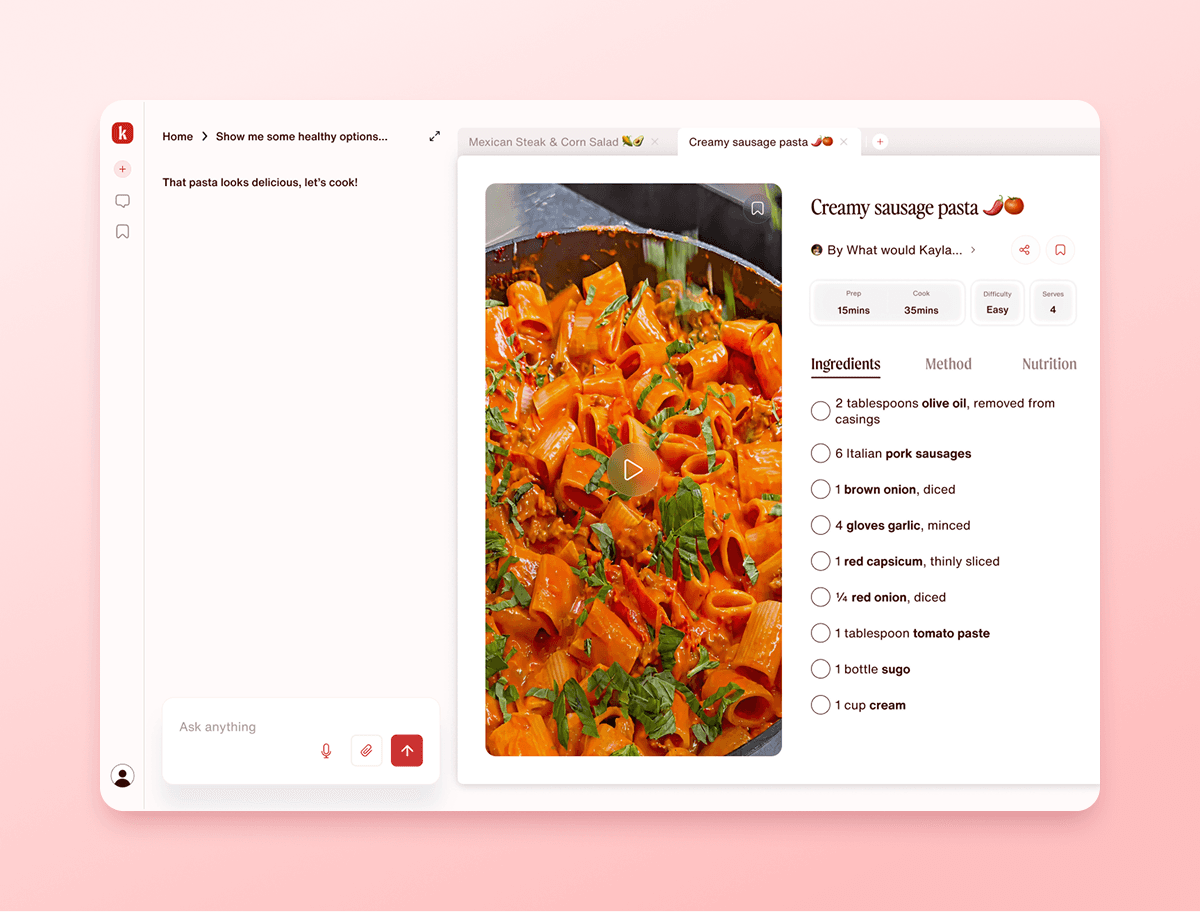
4. Simple, friendly UX for powerful AI features
We wrapped all AI capabilities in extremely lightweight UX:
• One-tap recipe parsing
• Automatic ingredient detection and tagging
• GPT-powered cooking assistance
• Perplexity-powered search
Users experienced advanced AI without ever seeing the complexity behind it.
5. A visual identity built for modern food culture
We crafted a brand and interface that felt warm, social, and creator-forward bold imagery, spacious layouts, and a clean visual tone that stood out from traditional recipe apps.